How I Found Calm Through Daily Qigong—Simple, Real, and Life-Changing
For years, I struggled with stress and low energy, trying every quick fix out there. Nothing lasted—until I discovered qigong. Not as a trend, but as a daily rhythm. Just 10 minutes every morning, same time, same flow. Slow movements, steady breath. Within weeks, I felt calmer, sharper, more balanced. It wasn’t magic—just consistency. This is how routine regularity transformed my wellness, and how it can quietly change yours too.
The Burnout That Changed Everything
Like many women in their thirties, forties, and beyond, life had become a checklist of responsibilities: work deadlines, household duties, caring for children or aging parents, and the constant hum of digital notifications. The exhaustion wasn’t just physical—it was mental and emotional. There were mornings when getting out of bed felt like lifting weights. I’d stand in front of the mirror and wonder why I looked so tired, even after eight hours of sleep. My mind raced from the moment my eyes opened, rehearsing the day’s to-do list, worrying about what I might forget, or how I’d manage yet another obligation.
I tried everything to regain my balance. I downloaded meditation apps, bought expensive supplements, attended high-intensity fitness classes, and even experimented with weekend retreats promising instant transformation. Some helped—for a day or two. But the relief was fleeting. The real issue wasn’t a lack of effort; it was a lack of sustainability. The solutions I pursued were intense, time-consuming, or required special conditions—perfect silence, an hour of free time, or a certain mood. When life inevitably got busy, these practices were the first to fall away.
The turning point came after a particularly rough week. I had canceled a doctor’s appointment because I was too overwhelmed to go, and I snapped at my child over something trivial. That night, I sat on the edge of my bed and realized I wasn’t just tired—I was running on empty. I didn’t need another quick fix. I needed something gentle, repeatable, and doable—even on the hardest days. I needed a practice that didn’t ask for perfection, just presence. That’s when I first encountered qigong, not through a viral video or celebrity endorsement, but through a quiet recommendation from a friend who’d struggled with similar fatigue.
What Is Qigong—And Why It’s Not Just “Weird Breathing”
When I first heard the word qigong, I’ll admit, I pictured something mystical—people in robes waving their arms in a park, chanting under the moonlight. But as I learned more, I realized how wrong that image was. Qigong (pronounced “chee-gong”) is a mind-body practice rooted in traditional Chinese medicine, with a history stretching back thousands of years. At its core, it’s about cultivating and balancing qi—often translated as “life energy” or “vital force.” But you don’t need to believe in energy fields to benefit from it. Think of qi more like the body’s internal rhythm: the breath, the pulse, the nervous system’s quiet hum.
Qigong combines three simple elements: gentle movement, coordinated breathing, and mindful focus. Unlike high-intensity workouts that push the body to its limits, qigong works with the body’s natural intelligence. The movements are slow, often repetitive, and designed to be accessible to anyone—regardless of age, fitness level, or physical condition. You don’t need special equipment, a gym membership, or even much space. A corner of your living room is enough.
One of the biggest misconceptions is that qigong is religious or spiritual in a dogmatic sense. It’s not. While it has philosophical roots, modern qigong is practiced widely in hospitals, rehabilitation centers, and wellness programs around the world as a secular, evidence-informed tool for health. Research has shown that regular practice can help reduce stress, improve balance, enhance sleep quality, and support cardiovascular health. It works, in part, by activating the parasympathetic nervous system—the body’s “rest and digest” mode—counteracting the chronic “fight or flight” state so many of us live in.
For women juggling multiple roles, this gentle approach is not a step backward—it’s a strategic reset. It doesn’t demand hours of your time or perfect conditions. It asks only that you show up, breathe, and move with intention. And over time, that simple act can rebuild your resilience from the inside out.
Why Routine Regularity Beats Intensity Every Time
We live in a culture that glorifies intensity. We’re told to “push through,” “go harder,” and “maximize every minute.” But when it comes to well-being, consistency is far more powerful than intensity. Think of it like watering a plant. You wouldn’t pour an entire bucket of water on it once a week and expect it to thrive. The roots would drown, the soil would harden, and the plant would suffer. But water it a little each day, and it grows steadily, strong and resilient.
The same principle applies to qigong. A single 60-minute session once a month won’t rewire your nervous system. But 10 minutes every morning—same time, same sequence—creates a rhythm that your body begins to recognize and trust. This is what scientists call habit formation: the process by which repeated behaviors become automatic. When you practice qigong daily, you’re not just doing exercises—you’re training your body to return to a state of calm, even when life is chaotic.
There’s also a biological advantage to regularity. Our bodies operate on circadian rhythms—internal clocks that regulate everything from hormone release to body temperature. When you practice qigong at the same time each day, especially in the morning, you’re aligning your practice with your body’s natural wake-up cycle. This strengthens the rhythm, making it easier to wake up feeling alert and centered. Over time, this small ritual can improve sleep quality, mood stability, and even digestion.
Studies in behavioral psychology support this. Research has consistently shown that people who engage in short, consistent self-care practices are more likely to maintain them long-term than those who rely on intense but infrequent efforts. The key isn’t how hard you practice—it’s how often. For busy women, this is empowering. You don’t need to carve out hours. You just need to show up, day after day, for a few quiet minutes of presence.
My Morning Flow: The 10-Minute Sequence That Works
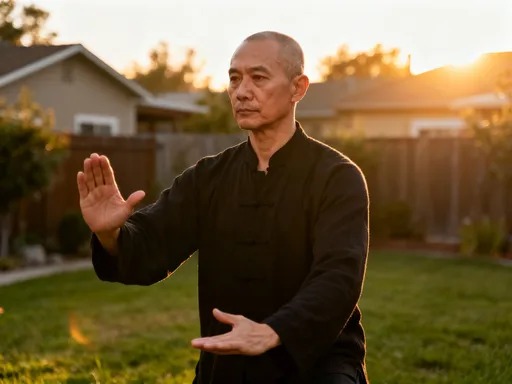
My qigong practice begins the moment I step onto my mat—no need for shoes, just bare feet on the floor. I start with Standing Meditation, also known as “Zhan Zhuang.” I stand with feet shoulder-width apart, knees slightly bent, spine tall, arms relaxed at my sides. I close my eyes and focus on my breath—slow, deep inhales through the nose, soft exhales through the mouth. For two minutes, I just stand. No goal, no agenda. This simple act signals to my nervous system: You are safe. You are here. It’s like hitting a reset button before the day begins.
Next, I move into Arms Rising with Breath. As I inhale, I slowly lift my arms out to the sides and up overhead, palms facing up. As I exhale, I lower them back down, palms turning inward. I repeat this for three minutes, syncing each movement with my breath. This gentle motion warms up the joints, encourages deep diaphragmatic breathing, and helps release tension in the shoulders and upper back—areas where stress often settles.
Then comes Waist Turns. I keep my feet planted and gently rotate my upper body from side to side, letting my arms swing naturally. I don’t force the movement—I let it flow. This loosens the spine, improves coordination, and stimulates the internal organs. It also creates a meditative rhythm, like a slow dance with myself. I do this for about two minutes, feeling the subtle shift in my center of gravity with each turn.
I end with Grounding. I return to standing meditation, but this time, I imagine roots growing from the soles of my feet into the earth. I take five deep breaths, feeling more anchored, more present. When I open my eyes, the world feels a little quieter, a little clearer. I don’t always feel euphoric—but I feel centered. And that makes all the difference in how I meet the day.
How to Build the Habit Without Burning Out
Starting a new habit is hard—especially when you’re already stretched thin. The key is to make it as easy as possible to succeed. I didn’t begin with 10 minutes. I started with five. And some days, I only did three. The goal wasn’t duration; it was consistency. I anchored my practice to an existing habit: brushing my teeth. Right after, I stepped onto my mat. No decision-making, no mental negotiation—just automatic flow.
I also created subtle cues. I left my mat unrolled in the corner of my bedroom. I placed a small chime nearby. These visual and auditory signals reminded me without pressure. I didn’t need motivation—I just needed a nudge. And on days when I felt resistance, I gave myself permission to do less. I’d stand and breathe for one minute. But showing up—even briefly—kept the rhythm alive.
Another important lesson: don’t chase perfection. Some mornings, my mind was still racing. My movements felt stiff. I’d forget the sequence. That’s okay. Qigong isn’t about flawless execution. It’s about showing up with kindness toward yourself. I stopped tracking progress by how I felt and started measuring it by whether I practiced. Over time, the benefits emerged—not because I forced them, but because I allowed space for them to grow.
And if I missed a day? I didn’t berate myself. I simply returned the next morning. Self-compassion isn’t a luxury—it’s a necessity for sustainable change. For women who often put everyone else first, this practice became a quiet act of self-respect.
Beyond the Body: Mental Clarity and Emotional Balance
The physical benefits of qigong are real: improved posture, better balance, reduced stiffness. But what surprised me most were the mental and emotional shifts. After a few weeks, I noticed I wasn’t reacting as quickly to stress. When the phone rang with bad news, I didn’t immediately tense up. I paused. Took a breath. Responded instead of reacted. It was as if my nervous system had developed a buffer—a space between stimulus and response.
This is not imaginary. The breath-movement coordination in qigong directly activates the vagus nerve, a key component of the parasympathetic nervous system. When the vagus nerve is stimulated, heart rate slows, blood pressure lowers, and the mind becomes calmer. It’s a physiological shift, not just a psychological one. Over time, this creates a new baseline—less reactivity, more resilience.
I also found my focus improving. Mornings used to be a blur of half-finished thoughts and forgotten tasks. Now, after my practice, I can sit down and write a clear email, plan meals, or simply enjoy a quiet cup of tea without feeling the urge to multitask. My sleep deepened, too. I fell asleep faster and woke up feeling more restored. These changes weren’t dramatic—they were subtle, like background music slowly shifting from chaos to harmony.
For women navigating the emotional complexities of midlife—hormonal shifts, caregiving stress, identity transitions—this emotional regulation is invaluable. Qigong doesn’t erase challenges, but it gives you a steadier vessel to carry them in.
Making It Your Own—Sustainability Over Perfection
One of the most freeing realizations was that qigong doesn’t have to look the same every day. Some mornings, I do the full 10-minute sequence. Other days, I just stand and breathe for five minutes. Sometimes I practice in the evening instead, especially if I’ve had a particularly stressful day. The practice adapts to life, not the other way around.
I also began to notice small shifts worth recording. I started a simple journal—not to track progress, but to acknowledge it. I’d write things like: “Felt less anxious today,” or “Paused before reacting to my partner,” or “Slept through the night.” These weren’t grand achievements, but they were real. And over time, they added up.
Qigong isn’t a cure-all. It won’t solve every problem or erase every worry. But it creates space—space to breathe, to feel, to choose. It’s not about becoming someone else. It’s about returning to yourself, gently, daily. And for women who’ve spent years pouring from an empty cup, that return is revolutionary.
The most important thing I’ve learned? Real change doesn’t come from intensity. It comes from repetition. From showing up, again and again, not because you feel like it, but because you’ve made a quiet promise to yourself. That promise—that daily act of care—is where transformation begins.
In a world that never slows down, qigong offers a different rhythm. One that honors the body’s need for stillness, the mind’s need for clarity, and the heart’s need for peace. It’s not flashy. It doesn’t require special skills. But practiced with consistency, it can quietly reshape your life. Not with a bang, but with a breath. Not in a day, but over time. And that, perhaps, is the most powerful change of all.